Cooking Ingredient Locations in DragonSword Awakening
Orbis has 4,202 gathering nodes across 34 named ingredients, from Silverwing Fillet at 407 nodes down to three ingredients with only 10 nodes each.
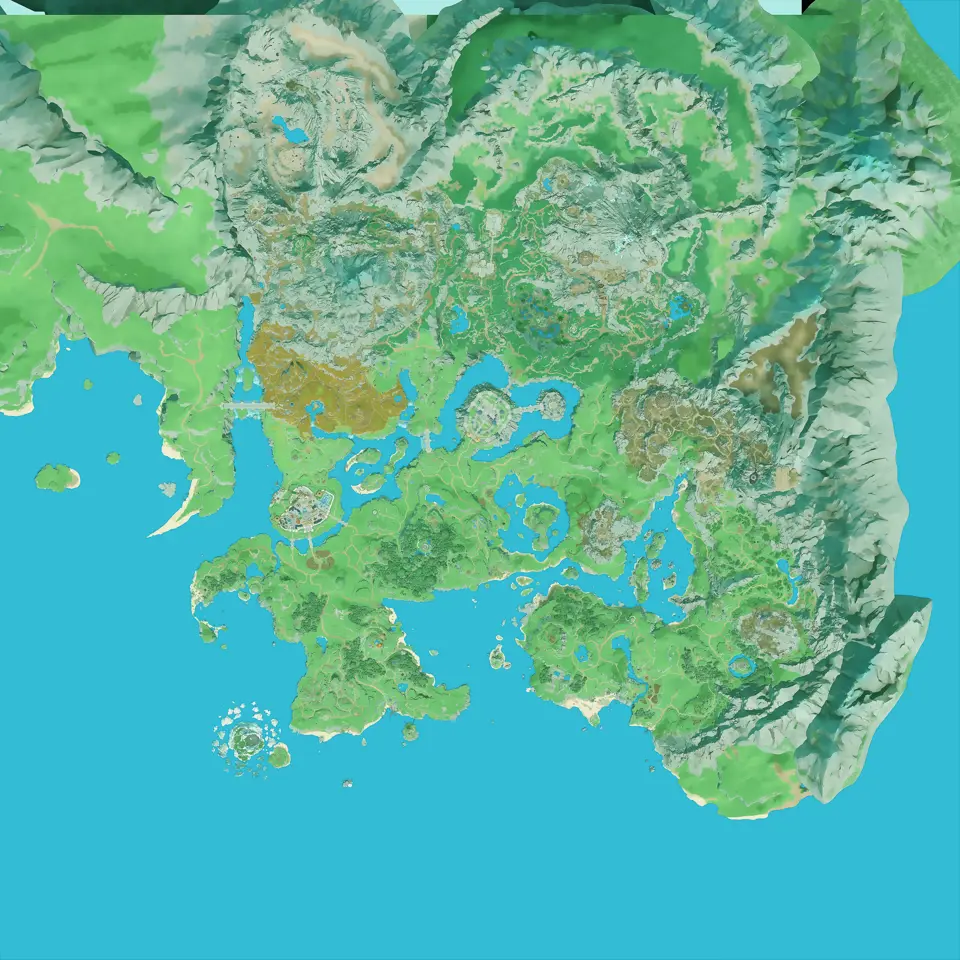
Layers this guide uses

Orbis carries 4,202 gathering nodes, and they split into 34 named ingredients with very different node counts. The map lets you switch off the 33 you do not care about and leave one on. Open the gathering layer and the full ingredient list is in the layer panel.
Every ingredient and how many nodes it has
| Ingredient | Nodes in Orbis |
|---|---|
| Silverwing Fillet | 407 |
| Rock Mushroom | 356 |
| Dawn Lanternleaf | 355 |
| Tree Sap Mushroom | 288 |
| Conch | 220 |
| Bird Eggs | 203 |
| Whitebloom Carrot | 181 |
| Radish | 155 |
| Salmon Fillet | 147 |
| Shrimp Flesh | 143 |
| Wild Onion | 129 |
| Cave Mushroom | 124 |
| Dwarf Potato | 121 |
| Trout Fillet | 119 |
| Blue Lotus Mushroom | 110 |
| Shellfish | 105 |
| Dried Maneflower | 93 |
| Aqualily | 92 |
| Grave Bellherb | 82 |
| Round Eggplant | 82 |
| Sand Crab | 75 |
| Lantern Gourd | 67 |
| Drop of Purity | 66 |
| Fruit of Vitality | 66 |
| Leaf of Vigor | 66 |
| Primordial Seed | 65 |
| White Dewblossom | 55 |
| Leaflet Tomato | 52 |
| Honey | 51 |
| Waveleaf Cabbage | 51 |
| Goose Eggs | 45 |
| Shining Blue Lotus Mushroom | 10 |
| Shining Dawn Lanternleaf | 10 |
| Useful Iron Ore | 10 |
Those 34 add up to 4,201. The 4,202nd node on the layer is a single Dirty Official Document, which has exactly one position in the whole of Orbis and is not an ingredient at all.
The shape of that table is the useful part. Sixteen ingredients have more than 100 nodes each and you will trip over those without trying. The bottom third of the list is the opposite problem: at 66 nodes and below, an ingredient stops being something you pick up along the way and becomes something you make a trip for.
Filter the map to a single ingredient
The gathering layer has one checkbox per ingredient. Open the layer, hit Hide all inside the gathering group, then tick back the one ingredient you want. The map redraws to that ingredient alone and the address bar updates, so the link you copy afterwards reproduces exactly that view for anyone you send it to.
That filter is what makes the layer usable. All 4,202 nodes on screen at once tells you nothing about where Leaflet Tomato grows. Fifty-two nodes on an otherwise empty map answers it at a glance.
Pair it with the region labels when you want context: gathering nodes with the 47 named Locations puts a name to the part of the map your nodes cluster in.
The three ten-node ingredients are each one patch
Three ingredients have only 10 nodes each in the entire game, and all three behave the same way. Those 10 nodes sit in one tight patch you can clear in a single stop.
Shining Blue Lotus Mushroom: all 10 sit together near the Shadowed Woods label. Jump straight to the patch.
Shining Dawn Lanternleaf: also 10, also near Shadowed Woods, spread a little wider than the mushrooms but still one spot. Jump to that patch.
Useful Iron Ore: 10 nodes in one patch, closest to the Hill of Journey label and a long way from the other two. Jump to it.
Shadowed Woods holding two of the three is worth knowing on its own. If a recipe wants both shining variants, you can get them in one trip.
Building a route instead of a wander
For anything over 100 nodes, route quality matters more than knowing the locations, because you already have more locations than you can visit. Gathering nodes with the 19 Warp Points is the view that fixes this. Pick a Warp Point, look at the density around it, and gather outward until the nodes thin out rather than walking a line you drew on a different map.
Conch and Bird Eggs are a good illustration of why the route matters more than the count. They have almost the same number of nodes, 220 and 203, and they behave nothing alike. Conch bunches up, with nearly half its nodes falling around Skyspire Rock Mountain and Shaded Tree Hill, so one trip to the right place fills your bag. Bird Eggs turn up near most of the 47 named Locations, which means no single trip helps much and you are better off collecting them as you pass through.
Finding one ingredient by name
The map’s search box takes ingredient names directly. Type “Leaflet Tomato” and you get its nodes as results, and picking one moves the map to it. That is often faster than working the filter panel when you only need to see where an ingredient lives before deciding whether to bother.
Search is also the quickest way to settle the ingredients that sound alike. Dawn Lanternleaf has 355 nodes and Shining Dawn Lanternleaf has 10. Blue Lotus Mushroom has 110 and Shining Blue Lotus Mushroom has 10. Read the recipe carefully, because the trip is completely different in each case: the plain versions are spread across many regions and the shining versions are single patches you have to go to on purpose. Blue Lotus Mushroom does not grow anywhere near where its shining version does.
Two mid-sized ingredients are worth a dedicated trip rather than opportunistic pickup. Blue Lotus Mushroom concentrates heavily around Bluehill Wetlands, close to half its 110 nodes. Leaflet Tomato, at 52 nodes, leans on Two Lakes Hill and Echo Canyon, and outside those two areas it is scarce enough that wandering will not find it.
Nodes come back, and the timer is not confirmed
Gathering nodes respawn, so a route is repeatable rather than a one-time clear. How long that takes is not something published map data can tell you, and the respawn figures circulating for this game are not confirmed. Assume a route is re-runnable and check it yourself rather than planning a session around a specific number of hours.
Node positions do not move between respawns, which is what makes the map worth marking up in the first place. What you cleared last time is where you will clear it again.
Ore on the gathering layer is not the Mining layer
Useful Iron Ore sitting under gathering reads oddly, since Orbis also has a separate Mining layer with 4,049 markers of its own. The two are different systems and Useful Iron Ore belongs to gathering, so it is in the table above and nothing on the Mining layer is. If you are after crates, barrels or crystals instead, those are on the Mining layer.
Every count on this page is for game build 24597321.
Maps in this guide
More DragonSword Awakening guides
All 1,498 Treasure Chest Locations in DragonSword Awakening
The Orbis overworld holds 1,498 treasure chests: 551 Premium, 355 Rare, 299 Regular, 181 Hero and 112 Legendary.Read the guideAll 43 Fast Travel Points on the DragonSword Awakening Map
Fast travel in Orbis runs on 43 nodes: 19 Warp Points, 11 Eona's Legacy towers and 13 Statues of Organa, and the towers are what burn the fog off your map.Read the guideDragonSword Awakening Treasure Maps and Master Skill
The Treasure Map layer marks 29 dig sites in Orbis, and every one of them is a chest you cannot open by walking up to it: 28 Legendary and 1 Hero.Read the guideDragonSword Awakening: 40 Sudden Missions and 9 Field Bosses
Orbis has 40 Sudden Missions and 9 Field Bosses, and the game only puts a Sudden Mission on your own map once you have walked into it.Read the guideDragonSword Awakening Interactive Map: Orbis Guide
The Orbis interactive map contains 15,055 markers across 15 recorded categories, with search, layer filters and local progress tracking.Read the guide